Lesbian
 Trans
Trans People of Color
 Drag Queen/King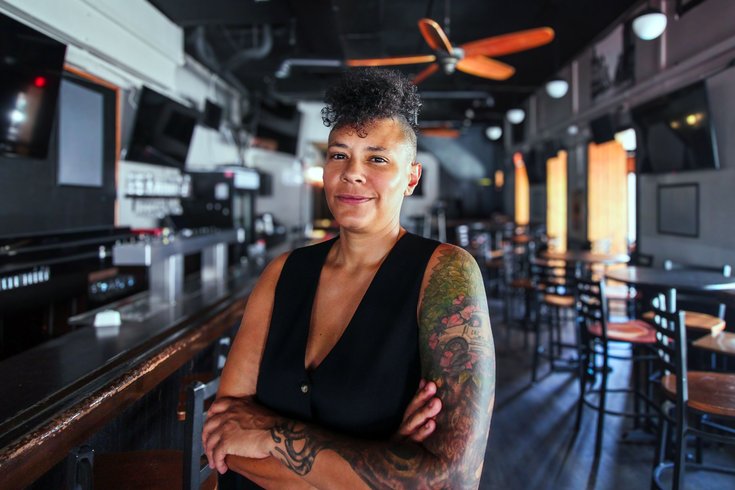
Reported developments from Feb. 20, 2026, with major local coverage published March 5, 2026
On a busy Friday night in Philadelphia, a packed room, a buzzing South Street energy, and the familiar comfort of community were interrupted – suddenly and loudly – by a heavy law-enforcement presence.
On February 20, 2026, a multi-agency compliance inspection took place at Marsha’s (430 South St.), the city’s queer women-centered sports bar founded by Chivonn Anderson. The inspection – triggered by anonymous complaints alleging licensing issues, underage service, and after-hours alcohol sales – ended with a crucial fact: authorities later confirmed no violations were found, and no citations were issued.
And yet, what many people are talking about isn’t only the outcome. It’s the experience – what it means for a queer space to be “checked” in a way that feels like a raid, and how quickly safety can turn into surveillance when uniforms and flashlights move through a room full of LGBTQ+ patrons.
This moment has become bigger than one night. It has sparked a conversation about fairness, proportional response, transparency, and the long historical shadow of policing queer gathering spaces in America.
Video described in coverage shows officers entering the bar shortly after 11:30 p.m., moving through the space – some with flashlights – and going upstairs. Chivonn Anderson said investigators remained inside for roughly 40 minutes. Officials later confirmed no violations were found and no citations were issued. Still, the reporting noted that authorities did not publicly explain why such a large number of officers were involved in the response.
For Anderson, the impact was personal and immediate. She described the incident as “traumatizing” – a word that carries weight not only because of what happened, but because of the history many LGBTQ+ people carry into moments like these.
When Marsha’s opened, it wasn’t just “another” nightlife spot. It was a deliberately built space for queer women, trans people, and nonbinary people – especially those who rarely see themselves centered in traditional sports bar culture. It was a place designed not only for watching games, but for belonging.
The bar’s very name gestures to queer history. Marsha P. Johnson, a Black transgender activist, is widely associated with LGBTQ+ resistance and the legacy of communities pushing back against discriminatory policing. The symbolism is powerful: a space named for queer liberation experiencing a law-enforcement surge that, even if framed as “routine,” felt anything but routine to patrons and community members following the story.
And there is another reason Marsha’s matters: queer women-centered venues remain rare. The Lesbian Bar Project currently lists only about three dozen lesbian bars nationwide. In that landscape, every new space becomes precious – and every disruption feels existential, not merely inconvenient.
The problem raised by this incident is not the idea of inspection in itself. It’s proportionality and context.
If an anonymous tip arrives, agencies can choose from a wide range of responses. Many inspections can be conducted with a minimal footprint – especially when there is no immediate danger, violence, or emergency. But when a response includes a large police presence, moves through a crowded space, and visibly changes the atmosphere, it can cross an invisible line: from oversight into intimidation, regardless of intention.
And intention, importantly, is not the only measure of harm.
For LGBTQ+ communities – particularly queer women, trans people, and queer people of color – police presence has never been neutral. It can be triggering, destabilizing, and profoundly chilling. You can be “doing everything right” and still feel unsafe when the room fills with uniforms.
Anonymous reporting channels are common, and sometimes necessary. People fear retaliation; some information would never come forward without anonymity. But anonymous systems can also be weaponized – especially against new businesses, minority-owned businesses, or culturally distinct venues that attract prejudice.
When a space is queer, women-centered, and visibly inclusive, it becomes a target not only for casual hate but for strategic harassment: repeated complaints that drain staff, scare customers, and create a public narrative of suspicion.
Even when the accusations are unfounded, the damage isn’t erased by “no citations issued.” The experience becomes part of the venue’s story – and in a fragile nightlife economy, perception can be as dangerous as any fine.
For decades, LGBTQ+ people gathered where they could, often in nightlife venues because public space was hostile and private space was limited. Bars became community centers, job networks, family, and refuge. That refuge was frequently interrupted by law enforcement, sometimes violently, often humiliatingly – through ID checks, entrapment tactics, harassment, and raids that relied on moral panic as much as any real public safety concern.
The cultural memory of that history remains alive. So when modern agencies conduct an inspection in a manner that resembles a “show of force,” communities do not experience it as isolated. They experience it as familiar.
That doesn’t mean every inspection is oppression. It means queer communities have reason to ask: Why this scale? Why this tone? Why this many officers? Why here, why now?
Here are the kinds of questions Philadelphians are right to ask in moments like this:
A city can enforce regulations without turning compliance into spectacle. It can protect public safety without undermining the public’s sense of safety.
People may not announce their fear. They may simply stop attending. They may choose a house hang instead of a night out. They may decide it isn’t worth the risk to be in a space that could become the scene of an aggressive inspection.
And for queer venues – especially those dedicated to queer women and trans communities – that kind of hesitation can be economically devastating.
It also damages something harder to measure: a sense of public belonging. If queer people learn that visibility invites scrutiny, then the city loses more than nightlife. It loses culture, connection, and community resilience.
In that context, Marsha’s is not a fringe venue. It is part of the city’s social infrastructure – one of the places where people find joy, friends, confidence, and care. That is not trivial. For LGBTQ+ people – especially younger adults, trans newcomers, and anyone rebuilding after rejection – public spaces can be lifelines.
So the question isn’t only “Was the inspection legal?” The deeper question is: “Was it necessary to conduct it this way?”
Because legality is not the same as legitimacy. And public institutions do not earn trust through authority alone – they earn it through fair, consistent, humane practice.
That can include:
And for the community, it can include what queer communities have always done best: showing up.
Support can be as direct as spending money at Marsha’s, attending events, tipping staff well, and speaking responsibly about what happened – sticking to confirmed facts while still naming how the experience felt and why it matters.
Because queer spaces don’t survive on vibes alone. They survive on consistent community investment – and on cities choosing to treat them like assets, not anomalies.
She’s right.
This is about what kind of city Philadelphia wants to be when it comes to queer safety – not only freedom from violence, but freedom from fear. Not only permission to exist, but the ability to gather without intimidation.
A compliance check that ends with “no violations found” should be the end of the story. In 2026, in a city that claims to value diversity and inclusion, it should never become a warning shot to a queer community that has already spent generations being told to stay quiet, stay hidden, and stay out of sight.
Philadelphia can do better – and this moment is a chance to prove it.
On a busy Friday night in Philadelphia, a packed room, a buzzing South Street energy, and the familiar comfort of community were interrupted – suddenly and loudly – by a heavy law-enforcement presence.
On February 20, 2026, a multi-agency compliance inspection took place at Marsha’s (430 South St.), the city’s queer women-centered sports bar founded by Chivonn Anderson. The inspection – triggered by anonymous complaints alleging licensing issues, underage service, and after-hours alcohol sales – ended with a crucial fact: authorities later confirmed no violations were found, and no citations were issued.
And yet, what many people are talking about isn’t only the outcome. It’s the experience – what it means for a queer space to be “checked” in a way that feels like a raid, and how quickly safety can turn into surveillance when uniforms and flashlights move through a room full of LGBTQ+ patrons.
This moment has become bigger than one night. It has sparked a conversation about fairness, proportional response, transparency, and the long historical shadow of policing queer gathering spaces in America.
What Happened at Marsha’s – What We Know
According to local reporting, the February 20 inspection involved the Philadelphia Police Department, the city’s Department of Licenses & Inspections (L&I), and the Pennsylvania State Police Bureau of Liquor Control Enforcement.Video described in coverage shows officers entering the bar shortly after 11:30 p.m., moving through the space – some with flashlights – and going upstairs. Chivonn Anderson said investigators remained inside for roughly 40 minutes. Officials later confirmed no violations were found and no citations were issued. Still, the reporting noted that authorities did not publicly explain why such a large number of officers were involved in the response.
For Anderson, the impact was personal and immediate. She described the incident as “traumatizing” – a word that carries weight not only because of what happened, but because of the history many LGBTQ+ people carry into moments like these.
Why Marsha’s Matters – Beyond Sports, Beyond a Bar
To understand why the February 20 inspection resonated so strongly, you have to understand what Marsha’s represents.When Marsha’s opened, it wasn’t just “another” nightlife spot. It was a deliberately built space for queer women, trans people, and nonbinary people – especially those who rarely see themselves centered in traditional sports bar culture. It was a place designed not only for watching games, but for belonging.
The bar’s very name gestures to queer history. Marsha P. Johnson, a Black transgender activist, is widely associated with LGBTQ+ resistance and the legacy of communities pushing back against discriminatory policing. The symbolism is powerful: a space named for queer liberation experiencing a law-enforcement surge that, even if framed as “routine,” felt anything but routine to patrons and community members following the story.
And there is another reason Marsha’s matters: queer women-centered venues remain rare. The Lesbian Bar Project currently lists only about three dozen lesbian bars nationwide. In that landscape, every new space becomes precious – and every disruption feels existential, not merely inconvenient.
Compliance vs. Proportionality: A Key Distinction
No serious community conversation should ignore a basic truth: compliance inspections exist for reasons that can be legitimate. Cities and states regulate alcohol service, occupancy limits, safety codes, and licensing requirements. These rules can protect patrons and workers.The problem raised by this incident is not the idea of inspection in itself. It’s proportionality and context.
If an anonymous tip arrives, agencies can choose from a wide range of responses. Many inspections can be conducted with a minimal footprint – especially when there is no immediate danger, violence, or emergency. But when a response includes a large police presence, moves through a crowded space, and visibly changes the atmosphere, it can cross an invisible line: from oversight into intimidation, regardless of intention.
And intention, importantly, is not the only measure of harm.
For LGBTQ+ communities – particularly queer women, trans people, and queer people of color – police presence has never been neutral. It can be triggering, destabilizing, and profoundly chilling. You can be “doing everything right” and still feel unsafe when the room fills with uniforms.
Anonymous Complaints and the Risk of Weaponized Systems
A detail that stands out in coverage is that Chivonn Anderson described the February 20 inspection as the second anonymous tip involving Marsha’s within a month.Anonymous reporting channels are common, and sometimes necessary. People fear retaliation; some information would never come forward without anonymity. But anonymous systems can also be weaponized – especially against new businesses, minority-owned businesses, or culturally distinct venues that attract prejudice.
When a space is queer, women-centered, and visibly inclusive, it becomes a target not only for casual hate but for strategic harassment: repeated complaints that drain staff, scare customers, and create a public narrative of suspicion.
Even when the accusations are unfounded, the damage isn’t erased by “no citations issued.” The experience becomes part of the venue’s story – and in a fragile nightlife economy, perception can be as dangerous as any fine.
The Broader Historical Context: Queer Spaces and Policing
It is impossible to separate this story from a long American history in which queer spaces – bars in particular – were policed, surveilled, and raided as a matter of routine.For decades, LGBTQ+ people gathered where they could, often in nightlife venues because public space was hostile and private space was limited. Bars became community centers, job networks, family, and refuge. That refuge was frequently interrupted by law enforcement, sometimes violently, often humiliatingly – through ID checks, entrapment tactics, harassment, and raids that relied on moral panic as much as any real public safety concern.
The cultural memory of that history remains alive. So when modern agencies conduct an inspection in a manner that resembles a “show of force,” communities do not experience it as isolated. They experience it as familiar.
That doesn’t mean every inspection is oppression. It means queer communities have reason to ask: Why this scale? Why this tone? Why this many officers? Why here, why now?
What Accountability Looks Like: Clarity, Consistency, and Care
If city agencies want public trust – especially in marginalized communities – then the path forward requires more than a statement that “no violations were found.” It requires transparency and policy-level clarity.Here are the kinds of questions Philadelphians are right to ask in moments like this:
- Thresholds: What criteria determine whether an inspection involves a small compliance team versus a large police presence?
- Consistency: Are similar complaints at other venues met with the same scale of response, or does enforcement look different depending on neighborhood, clientele, or ownership?
- Communication: Are business owners given a clear explanation of process, scope, and outcomes in real time?
- Trauma-informed practice: Are agencies trained to understand how certain approaches can re-traumatize communities with a documented history of discriminatory policing?
A city can enforce regulations without turning compliance into spectacle. It can protect public safety without undermining the public’s sense of safety.
Community Impact: When Patrons Stop Coming
One of the least discussed harms of high-visibility enforcement is the quiet aftermath.People may not announce their fear. They may simply stop attending. They may choose a house hang instead of a night out. They may decide it isn’t worth the risk to be in a space that could become the scene of an aggressive inspection.
And for queer venues – especially those dedicated to queer women and trans communities – that kind of hesitation can be economically devastating.
It also damages something harder to measure: a sense of public belonging. If queer people learn that visibility invites scrutiny, then the city loses more than nightlife. It loses culture, connection, and community resilience.
What Marsha’s Represents Now: A Test of Philadelphia’s Values
Philadelphia proudly brands itself as a city of neighborhoods, arts, and activism. South Street, in particular, has long held a reputation for self-expression and cultural edge.In that context, Marsha’s is not a fringe venue. It is part of the city’s social infrastructure – one of the places where people find joy, friends, confidence, and care. That is not trivial. For LGBTQ+ people – especially younger adults, trans newcomers, and anyone rebuilding after rejection – public spaces can be lifelines.
So the question isn’t only “Was the inspection legal?” The deeper question is: “Was it necessary to conduct it this way?”
Because legality is not the same as legitimacy. And public institutions do not earn trust through authority alone – they earn it through fair, consistent, humane practice.
Where Do We Go From Here?
If there is any good to come from this moment, it may be the clarity it provides: Philadelphia has an opportunity to modernize what enforcement looks like in community spaces – especially those serving marginalized groups.That can include:
- Publishing clearer guidance on how nightlife compliance checks are staffed and escalated.
- Ensuring that “routine” inspections do not default to intimidating police-heavy approaches.
- Building stronger communication channels between city agencies and venue owners so concerns are addressed without shock-and-awe responses.
- Creating mechanisms to flag and respond to patterns of potentially bad-faith anonymous complaints.
And for the community, it can include what queer communities have always done best: showing up.
Support can be as direct as spending money at Marsha’s, attending events, tipping staff well, and speaking responsibly about what happened – sticking to confirmed facts while still naming how the experience felt and why it matters.
Because queer spaces don’t survive on vibes alone. They survive on consistent community investment – and on cities choosing to treat them like assets, not anomalies.
A Closing Thought
When Chivonn Anderson said she wants to focus on making sure this does not happen again – and does not happen to other establishments – she framed this as bigger than one bar.She’s right.
This is about what kind of city Philadelphia wants to be when it comes to queer safety – not only freedom from violence, but freedom from fear. Not only permission to exist, but the ability to gather without intimidation.
A compliance check that ends with “no violations found” should be the end of the story. In 2026, in a city that claims to value diversity and inclusion, it should never become a warning shot to a queer community that has already spent generations being told to stay quiet, stay hidden, and stay out of sight.
Philadelphia can do better – and this moment is a chance to prove it.