
HIV Decriminalization Bill Clears Key Hurdle in Harrisburg, Heads to Full House Vote
Pennsylvania is one step closer to rewriting a decades-old law that advocates say criminalizes people for their health status rather than their actions.
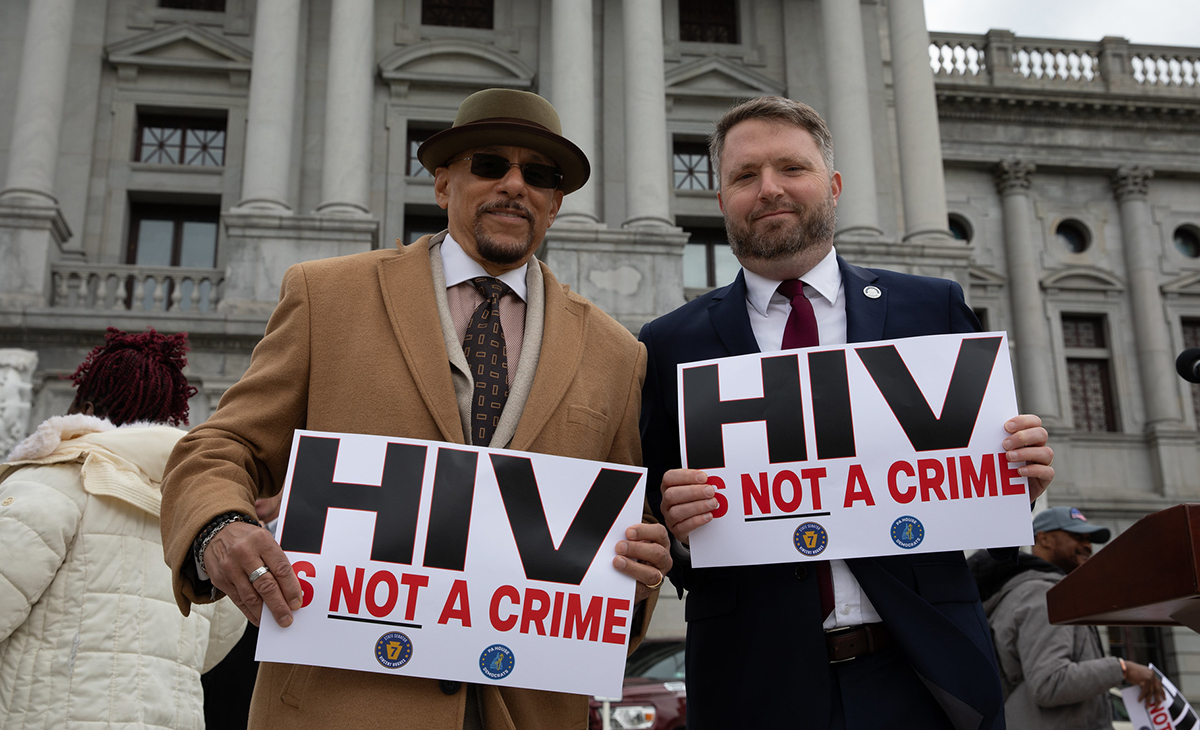
The state House Judiciary Committee on Tuesday voted to advance H.B. 632, legislation introduced by state Rep. Ben Waxman, D-Philadelphia, that would modernize how Pennsylvania law treats people living with HIV. The bill now heads to the full House for consideration when lawmakers return to session.
For Waxman, who represents parts of Center City and South Philadelphia, the moment is long overdue.
“By keeping laws in place that discriminate against people living with HIV, we are saying that we do not care about a vulnerable population in our state and that we are choosing to disregard new scientific findings on HIV,” Waxman said in a statement following the vote. “It is long past time to overturn this prejudicial law, and my piece of legislation aims to do just that.”
What the bill would change
Under current Pennsylvania law, people living with HIV can face enhanced criminal penalties based solely on their HIV status. That includes felony charges related to prostitution and other offenses, even when no transmission occurs.
Public health experts and civil rights advocates have argued for years that those provisions are rooted in outdated assumptions from the early years of the HIV epidemic — not in today’s medical reality.
Modern science has dramatically reshaped the understanding of HIV transmission. Antiretroviral therapy allows many people living with HIV to reach and maintain an undetectable viral load, meaning the virus cannot be sexually transmitted — a concept widely known as “U=U,” or “undetectable equals untransmittable.”
Yet Pennsylvania’s criminal statutes have not kept pace.
Waxman’s bill would remove HIV-specific penalty enhancements, aligning state law more closely with current scientific consensus and public health best practices. Supporters say that change would reduce stigma, encourage testing and treatment, and prevent people from being punished more harshly because of a medical condition.
A public health and equity issue
In Philadelphia, where community-based organizations have spent decades building trust around HIV testing and treatment, advocates view decriminalization as part of a broader health equity push.
Outdated criminal laws, they argue, can discourage people from getting tested — because knowing one’s status can increase legal risk under existing statutes. That dynamic runs counter to public health goals in a city that has made measurable progress in reducing new HIV diagnoses.
The bill also intersects with conversations about criminal justice reform. Enhanced penalties tied to HIV status have disproportionately affected marginalized communities, including Black and LGBTQ+ Pennsylvanians, who already face higher rates of both HIV diagnosis and incarceration.
By removing status-based enhancements, supporters say the law would shift the focus back to conduct rather than condition — a distinction increasingly reflected in reforms across other states.
What happens next
With committee approval secured, H.B. 632 now moves to the House floor, where it could be brought up for a vote as soon as lawmakers reconvene.
If it passes the House, the bill would then head to the state Senate for consideration. From there, it would need the governor’s signature to become law.
For now, the committee vote signals growing momentum behind a once-niche issue that has gained traction nationwide as science, medicine and public attitudes evolve.
In Harrisburg — and in communities like Philadelphia that have been on the front lines of HIV prevention and care — the debate is no longer just about statutes. It’s about whether the law reflects 1980s fear or 2026 science.
As Waxman and supporters frame it, Tuesday’s vote is a step toward closing that gap.