Philly Pride 365 announced this week that the 2026 Philadelphia Pride Festival is moving to the Benjamin Franklin Parkway on Sunday, June 7 – a grand civic corridor stretching from City Hall all the way to the Philadelphia Museum of Art. Three performance stages, food trucks, beer gardens, a family zone, and a new Maker’s Tent spotlighting LGBTQ+-owned businesses.
The move is driven by sheer scale. Attendance has exploded from 47,000 in 2022 to an estimated 147,000 in 2025. The Gayborhood simply can’t hold it anymore.
The 2026 festival also lands squarely in America 250 – the national semiquincentennial – with dedicated programming honoring the LGBTQ+ community’s role in American history. That framing feels right, because if you know Philadelphia’s queer history, the Parkway isn’t a new venue. It’s where this all started.
Before Stonewall: The Annual Reminder

Philadelphia’s LGBTQ+ activism predates Stonewall. Starting in 1965, activists from the Mattachine Society and the Daughters of Bilitis staged what they called the “Annual Reminder” – dignified, organized pickets in front of Independence Hall on July 4, demanding equal rights. They wore suits and dresses. They carried signs. They came back every year.
Those quiet demonstrations on America’s most sacred ground – led in part by Barbara Gittings, one of the most important LGBT+ activists in American history – helped forge the infrastructure of a movement. Then came Stonewall in 1969, and everything accelerated.
1972: The First March
Philadelphia’s first Gay Pride demonstration took place June 11, 1972, with over 10,000 people marching loudly and proudly from Center City to Old City. Several political-activist organizations – including the Gay Activists Alliance, the Homophile Action League, Radicalesbians, and groups from Penn State and Temple University – came together to produce it. The route started at Rittenhouse Square, marched east up Chestnut Street, and ended in an open-air dance and celebration at Independence Park.
Ten thousand people. In 1972. In Philadelphia. That number deserves to sit for a moment.
1973: The Parkway

In 1973, the parade began with a rally at Rittenhouse Square, wound around City Hall, headed up the Parkway, and ended with a fair at Eakins Oval in front of the Art Museum. That is almost exactly the footprint Philly Pride 365 is using in 2026.
Activists claimed the city’s grandest civic corridor – the same boulevard reserved for papal visits and championship parades – and declared they belonged there. The photo above is from that day.
The Community That Built Itself

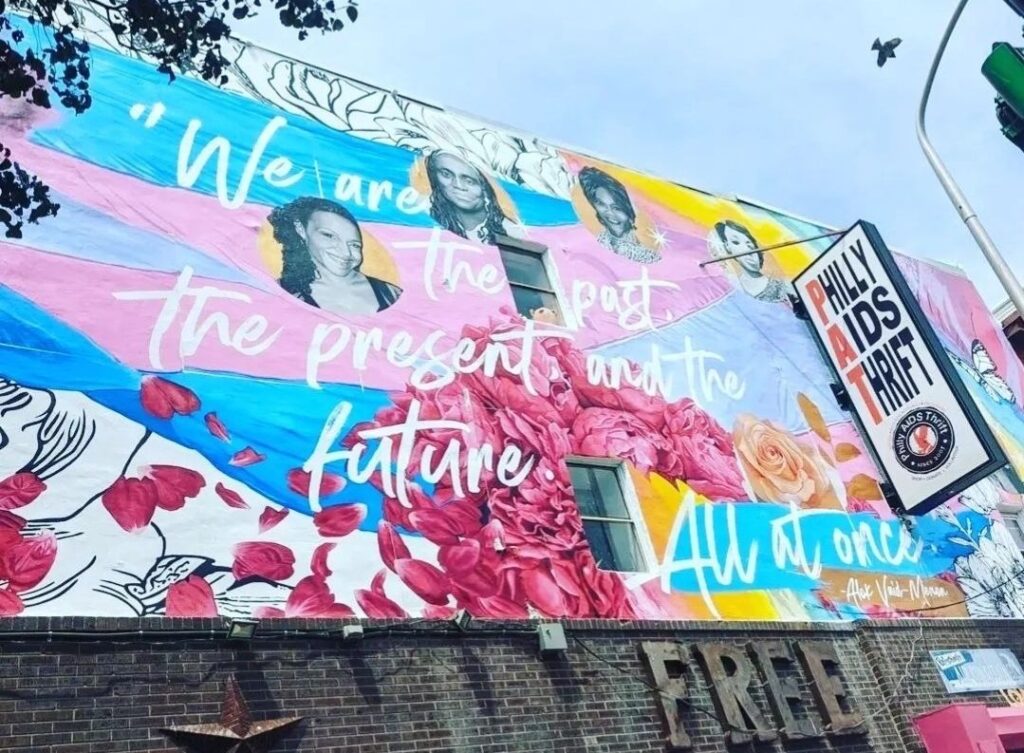
The year after the first Pride march, Giovanni’s Room – the first and oldest LGBTQ+ bookstore in the United States – opened in Philadelphia. (Today that address lives on as Philly AIDS Thrift @ Giovanni’s Room.) William Way LGBT Community Center, the city’s first LGBT community center, opened in 1976. Philadelphia Gay News, the first publicly distributed gay newspaper, launched in 1977. The Mazzoni Center, the city’s first LGBT health and wellness clinic, opened in 1979.
In the span of a decade, Philadelphia built the institutional scaffolding of a community – brick by brick, in the face of police raids that continued well into the early 1980s. Pride parades continued through 1976, then went quiet for a few years. But the community didn’t.
The 1980s: AIDS and Survival
The AIDS crisis hit Philadelphia’s LGBTQ+ community with devastating force. When federal, state and local governments failed to respond, Philadelphia activists stepped up. They formed groups like Action Wellness (then ActionAIDS), ACT UP Philadelphia, MANNA, Bebashi, Philadelphia FIGHT, and the AIDS Law Project of Pennsylvania – fighting for education, for care, for legislation, for lives.
In 1982, the Gay Rights Bill that had stalled year after year through the 1970s finally passed in City Council with almost no opposition. Pride in these years was not celebration for its own sake. It was survival, visibility, and fury made public.
The 1990s: Penn’s Landing and a New Era
The first official modern Pride Parade was organized at the end of the 1980s, intended to coincide with a rally at Love Park. It was so successful that community members formed the Lesbian and Gay Pride of the Delaware Valley – the organization that would eventually become Philly Pride Presents – with the goal of producing a parade and festival at Penn’s Landing each year.
Through most of the 1990s, the parade marched all the way from Rittenhouse Square to Penn’s Landing. By 1999, the route was shortened, beginning at 13th and Locust in the heart of the Gayborhood.
Also in 1990, the organization produced the first OutFest in the Gayborhood to celebrate National Coming Out Day – a block party that would grow into the largest NCOD event in the world. The Gayborhood got its name in 1995, when David Warner playfully paraphrased the Mister Rogers theme at OutFest: “It’s a beautiful day in the Gayborhood!” The name stuck. By 2007, rainbow street signs went up throughout the neighborhood, backed in part by the Independence Business Alliance – formal civic recognition that this corner of Philadelphia belonged to the community.
2021: A Reckoning and a Rebuild
In 2021, after organizing PrideDay and OutFest for 32 years, Philly Pride Presents abruptly dissolved facing community accusations of mismanagement, racism, and transphobia. Organizations like GALAEI and Philadelphia Black Pride had long been sounding the alarm about whose voices were centered – and whose weren’t. A local group of LGBTQ+ volunteers formed PHL Pride Collective to fill the void. That collective evolved into Philly Pride 365, the organization now producing the 2026 festival.
The rebuilding was messy and painful. It was also necessary.
2026: Back Where It Started
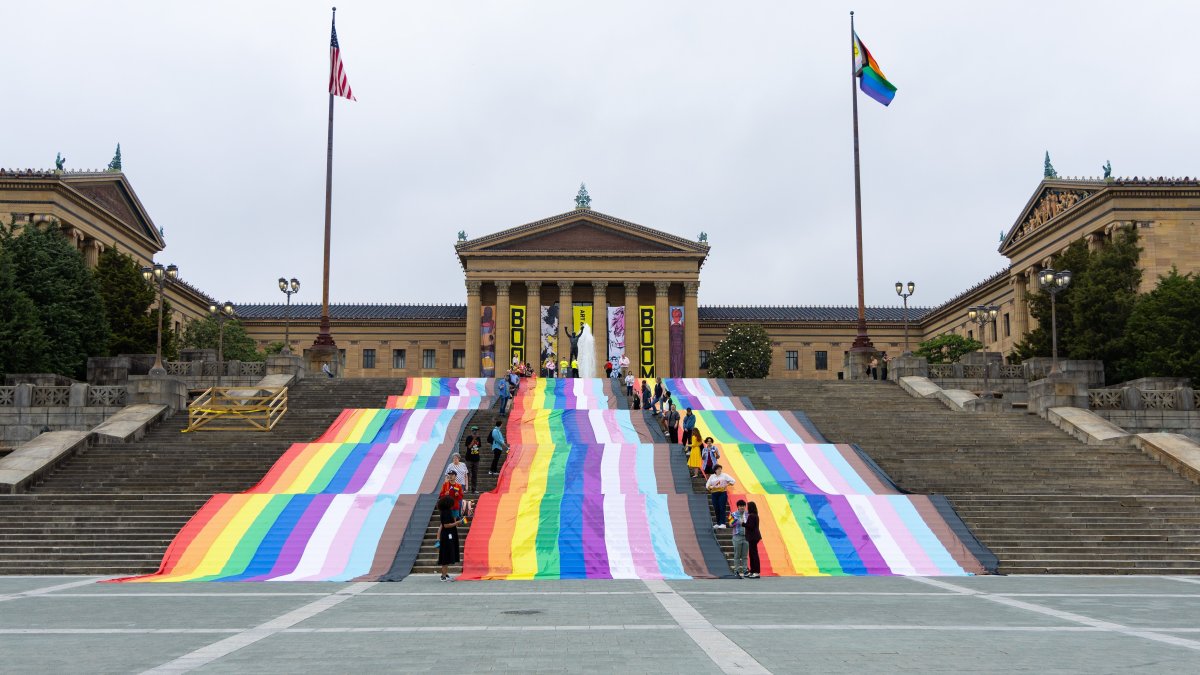
Fifty-four years after the first march down Chestnut Street, Pride is coming back to the Parkway – and bringing 147,000 people with it.
The 2026 festival on June 7 will feature three stages, a Maker’s Tent for LGBTQ+-owned businesses, food, beer gardens, family programming, and a $10 admission ticket with hardship waivers available through community partnerships. It also coincides with America 250 – a national reckoning with what this country has been, and who has always been part of it.
The theme is “Pride is Power.”
The people who marched up this boulevard in 1973 – when marching meant risk, when visibility meant danger – knew exactly what that meant. The scale is different now. But the throughline is unbroken: LGBTQ Philadelphians claiming the heart of their city, in public, without apology.
That’s not a new story. It’s the same one, still being written.
The 2026 Philadelphia Pride Festival takes place Sunday, June 7 on the Benjamin Franklin Parkway.
Get Tickets